SAN Electric Vacuum Conveyor Systems
₹ XXXX INR + GST
What Is an Electric Vacuum Conveyor?
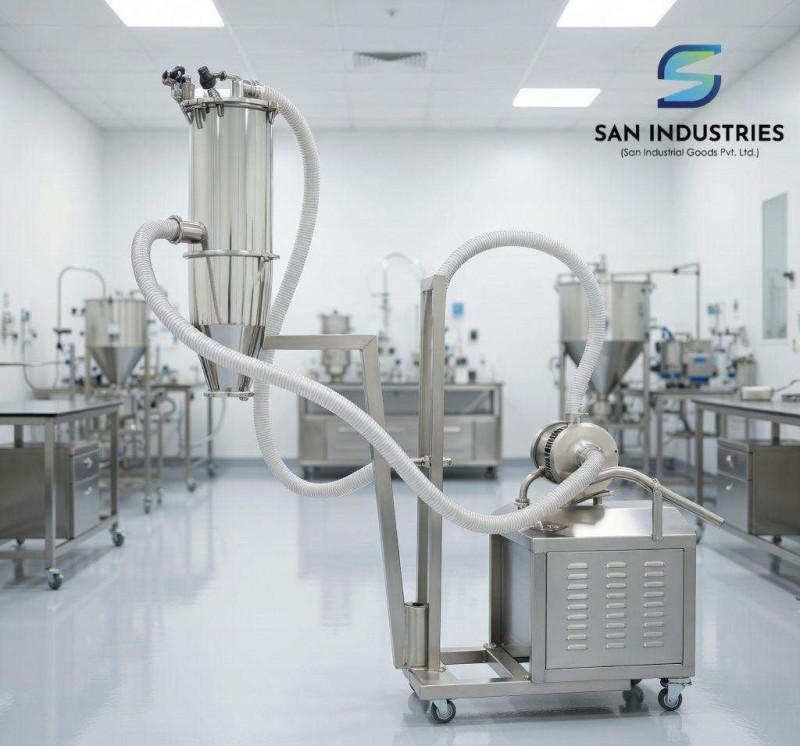
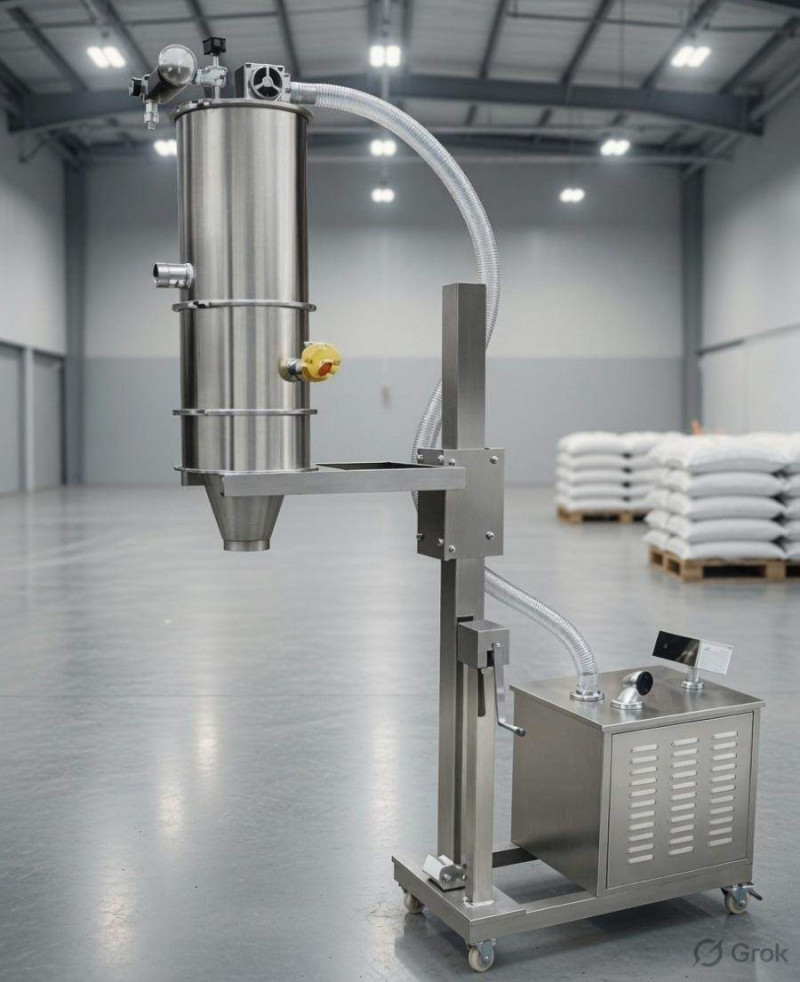
An electric vacuum conveyor is an enclosed material transfer system that uses an electrically powered vacuum pump to move powders, granules, tablets, pellets, and other bulk solids from one process point to another. By creating negative pressure inside the conveying pipeline, the system draws material from the source and transfers it efficiently to the receiving equipment.
Unlike open manual handling, it provides a controlled conveying route that can help reduce dust generation, material loss, and direct operator contact. Designed as a vacuum conveyor for powder, it can be integrated with equipment such as hoppers, silos, mixers, blenders, reactors, tablet presses, and packaging machines for efficient material transfer across pharmaceutical, food, chemical, cosmetic, plastic, and other industrial applications.
How Does an Electric Vacuum Conveyor Work?
An electric vacuum conveying system uses an electrically powered vacuum pump to create negative pressure inside the conveying line. This pressure difference draws powders, granules, and bulk solids from the source and transfers them through an enclosed pipeline to the receiving equipment.
The material is separated from the conveying air at the receiving chamber before being discharged into the next stage of production. This enclosed process makes the electric vacuum conveyor suitable for applications where controlled, hygienic, and efficient material transfer is required.
Material Pickup
The material is drawn from a hopper, drum, silo, bag dump station, or other source into the conveying pipeline.
Vacuum Generation
The electric vacuum pump generates the pressure difference required to move the material through the conveying line.
Material Transfer
The airflow carries the material through the pipeline toward the receiver, creating an enclosed powder transfer system.
Separation & Discharge
At the receiver, the product is separated from the conveying air and discharged into the downstream process equipment.
Key Features of an Electric Vacuum Conveyor
- High conveying capacity from 400 to 6000 kg/hr
- Available in 1.5 kW to 7.5 kW motor options
- Dust-free enclosed conveying system
- Food & Pharma Grade Construction
- SS304 or SS316L contact parts
- Low maintenance and energy-efficient operation
- Compact and space-saving design
- Automatic filter cleaning system
- Easy dismantling and cleaning
- Quiet operation
- PLC-based automatic control (Optional)
- Suitable for continuous industrial operation
Benefits of an Electric Vacuum Conveying System
An electric vacuum conveying system offers controlled material movement while reducing the need for manual powder handling. Its enclosed conveying route can support cleaner production environments and easier integration with different process machines.
- Reduced manual handling: Automates the movement of powders and bulk solids between process stages.
- Controlled powder transfer: Provides an enclosed route for transferring materials between equipment.
- Dust reduction: Helps minimize powder release during material movement compared with open handling.
- Hygienic operation: Stainless-steel contact parts support applications where cleanability and hygiene are important.
- Flexible integration: Can be connected to hoppers, mixers, blenders, reactors, and packaging equipment.
- Efficient material movement: Supports consistent transfer of suitable powders, granules, and bulk solids.
- Compact installation: The system can be integrated into different production layouts where space is limited.
Electric Vacuum Conveyor Applications
SAN electric vacuum conveyor systems are suitable for controlled transfer of powders, granules, and bulk materials across different manufacturing processes. They can function as a powder handling system between storage, processing, and packaging equipment.
- Pharmaceutical Industry
- Chemical Industry
- Plastic Industry
- Cosmetics
- Food Industry
Electric Vacuum Conveyor Technical Specifications
SAN offers different electric vacuum conveyor models to accommodate varying material transfer capacities and production requirements.
|
Model |
Capacity (kg/hr) |
Motor Power |
Material |
|---|---|---|---|
|
SAN EVC-1 |
400 |
1.5 kW |
SS304 / SS316L |
|
SAN EVC-2 |
600 |
2.2 kW |
SS304 / SS316L |
|
SAN EVC-3 |
1200 |
3.0 kW |
SS304 / SS316L |
|
SAN EVC-4 |
3200 |
5.5 kW |
SS304 / SS316L |
|
SAN EVC-5 |
6000 |
7.5 kW |
SS304 / SS316L |
Why Choose SAN Electric Vacuum Conveyors?
- Manufactured in India
- Custom-built as per application
- Stainless Steel GMP Design
- Low Energy Consumption
- Excellent After-Sales Support
- Fast Delivery
- Designed for Pharma, Food & Chemical Industries
- Proven Performance Across Multiple Industries
Typical Powder Transfer Applications
The SAN powder transfer system can be integrated into different stages of production to support controlled powder handling system operations.
- Silo to Mixer
- Bag Dump Station to Blender
- Drum to Hopper
- Reactor Loading
- Packaging Machine Feeding
- Tablet Press Feeding
- Capsule Filling Machine Feeding
- Pulverizer to Packing Machine
How to Select the Right Electric Vacuum Conveyor
Selecting the right electric vacuum conveyor depends on more than the required conveying capacity. Material properties, transfer distance, receiving equipment, and production requirements should all be considered.
Material Characteristics
Consider the material type, particle size, bulk density, flowability, moisture content, and product sensitivity.
Required Capacity
Determine the required transfer rate in kg/hr and whether the application requires continuous or batch conveying.
Conveying Distance
Consider the horizontal distance, vertical elevation, pipeline routing, and number of bends between the material source and receiving point.
Receiving Equipment
Identify whether the powder conveying system will feed a mixer, blender, hopper, reactor, tablet press, capsule filling machine, or packaging machine.
Construction Requirements
For pharmaceutical and food applications, consider suitable stainless-steel construction, cleanability, and hygienic requirements.
Available Utilities
The selection of an electric system should also consider the electrical supply available at the installation site.
Frequently Asked Questions
What is an electric vacuum conveyor?
An electric vacuum conveyor is a material conveying system that uses an electrically powered vacuum pump to transfer powders, granules, and other bulk solids through an enclosed conveying line.
How does an electric vacuum conveying system work?
An electric vacuum conveying system creates negative pressure inside the conveying line, drawing material from the source toward the receiving chamber. The material is then separated from the conveying air and discharged into the next process.
Can an electric vacuum conveyor be used for powder?
Yes. An electric vacuum conveyor can be used for suitable powder applications where the material characteristics and conveying requirements are compatible with the system design.
What is a vacuum conveying system used for?
A vacuum conveying system is used to transfer powders, granules, tablets, pellets, and other bulk solids between different stages of a manufacturing process.
What is the difference between a powder conveying system and a powder handling system?
A powder conveying system focuses primarily on transporting powder between process points, while a powder handling system can include the broader operations of storing, feeding, transferring, charging, and processing powder.
Is an electric vacuum conveyor suitable for pharmaceutical applications?
SAN's electric vacuum conveyor is designed for applications across pharmaceutical, food, chemical, cosmetic, plastic, and battery manufacturing industries. The final configuration should be selected according to the specific material and process requirements.
What capacity is available for SAN electric vacuum conveyors?
SAN currently lists electric vacuum conveyor models with capacities from 400 to 6000 kg/hr, with motor options from 1.5 kW to 7.5 kW.