San Pneumatic Vacuum Conveyor Systems
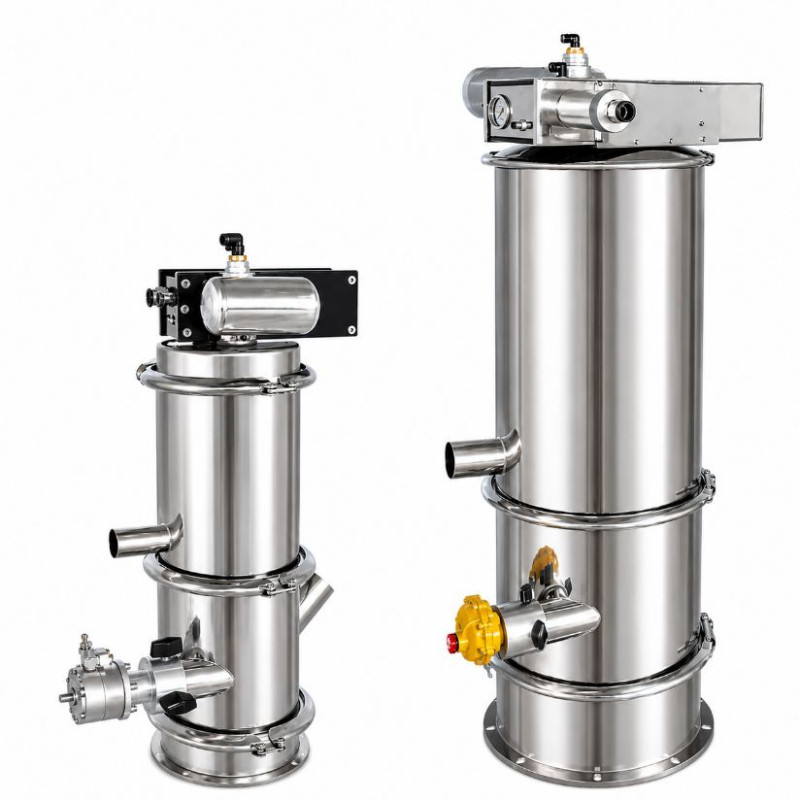
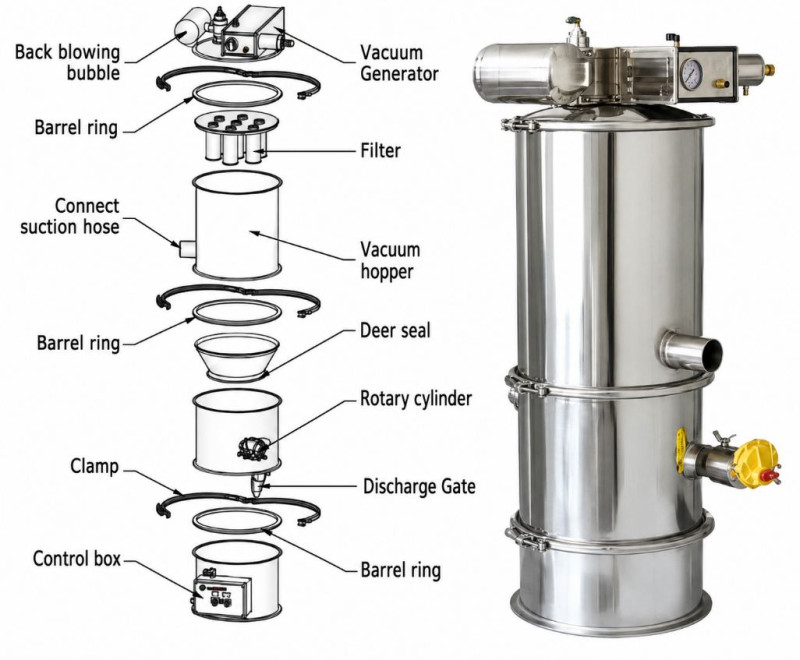
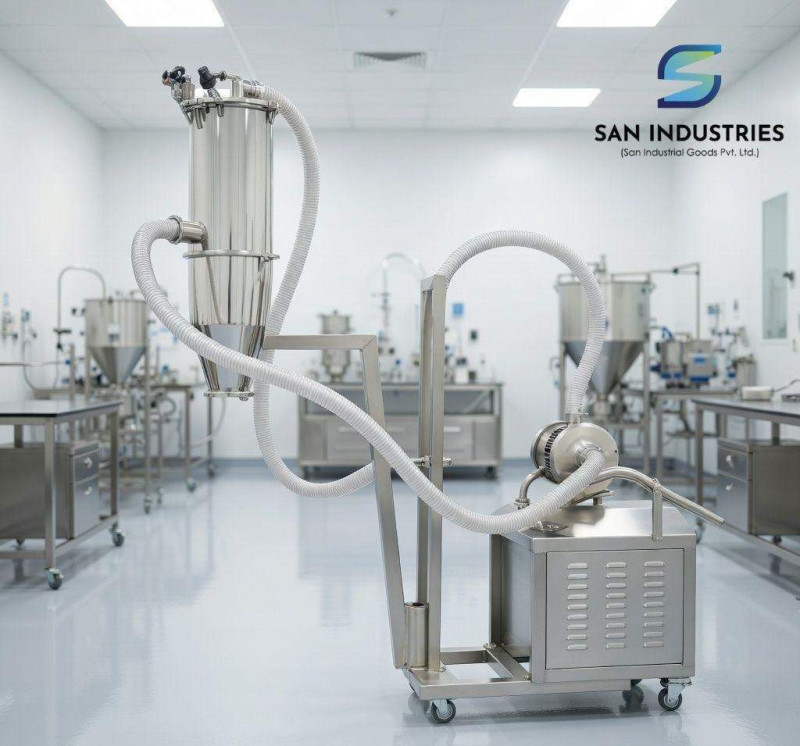
₹ XXXX INR + GST
What Is a Vacuum Conveying System?
A vacuum conveying system is a material-handling solution that uses vacuum pressure and controlled airflow to transfer powders, granules, and other dry bulk materials through an enclosed conveying line. Instead of manually moving material between process stages, the system draws material from a source and transports it to the required destination.
It is particularly useful when manufacturers need enclosed, controlled, and efficient transfer of dry materials. Depending on the material characteristics and process requirements, the system can be used as a powder vacuum transfer system for pharmaceutical powders, food ingredients, chemicals, plastic granules, and other bulk solids.
How Does a Vacuum Conveying System Work?
A vacuum conveying system works by creating a pressure difference that draws material from a source into the conveying pipeline. Compressed air is used to generate the required vacuum and airflow, allowing the material to travel through the enclosed pipeline toward the receiving vessel.
1. Material Pickup
The vacuum conveying system draws the required material from a hopper, bag, drum, silo, or other source. The material enters the conveying pipeline through a controlled inlet.
2. Vacuum Generation
A vacuum is created within the conveying system using compressed air or a suitable vacuum source. This pressure difference generates the airflow needed to draw the material through the pipeline.
3. Pneumatic Material Conveying
The generated airflow carries powders, granules, or other bulk solids through the enclosed conveying line. The controlled movement helps transfer material safely while reducing dust and manual handling.
4. Air and Material Separation
When the material reaches the receiving vessel, the conveying air passes through the filtration system while the solid material is retained. This separates the product from the conveying air before discharge.
5. Material Discharge
Once the conveying cycle is complete, the collected material is discharged into the connected process equipment. The cycle can then repeat automatically according to the required conveying capacity and process requirements.
Key Features of Vacuum Conveyors
SAN vacuum conveying systems are designed to provide controlled and efficient material transfer while supporting the hygiene, safety, and operational requirements
of modern processing plants.
- Dust-Free Material Transfer
- Closed Hygienic System
- GMP & Food Grade Design
- Stainless Steel SS304 / SS316 Construction
- Compact Modular Design
- Easy Cleaning & Maintenance
- Low Energy Consumption
- Gentle Product Handling
- Easy Integration with Existing Machines
- Automatic Filter Cleaning
- PLC Automation Available
Benefits of Vacuum Material Transfer
A vacuum conveying system provides an enclosed and controlled method for transferring powders, granules, and other dry bulk materials.
Key benefits include:
1. Dust-Free Material Transfer
The enclosed conveying pipeline helps minimise powder leakage and airborne dust during material transfer. This can contribute to a cleaner and more controlled production environment.
2. Reduced Manual Material Handling
A powder conveyor can automatically transfer materials between process equipment, reducing the need for manual lifting, pouring, and charging. This can improve operator convenience and process efficiency.
3. Hygienic Conveying
The enclosed design helps reduce direct exposure of materials to the surrounding environment. This makes vacuum conveying suitable for applications where hygiene and controlled material handling are important.
4. Controlled Powder Transfer
A pneumatic powder transfer system provides a controlled route for moving powders and other dry materials. Conveying parameters can be selected according to the material, required capacity, and process requirements.
5. Reduced Product Contamination
Because the material moves through an enclosed conveying line, exposure to external contaminants can be reduced compared with open manual transfer methods. This is particularly useful in pharmaceutical and food processing applications.
6. Flexible Equipment Integration
A vacuum conveyor can be connected to different process machines, including mixers, blenders, tablet presses, sifters, mills, reactors, hoppers, and packaging equipment.
7. Suitable for Different Materials
Depending on the system configuration, vacuum conveying can be used for powders, granules, pellets, flakes, tablets, capsules, and other suitable bulk solids.
8. Compact and Efficient Material Handling
Vacuum conveying can provide a practical way to move materials across different stages of a production process without requiring extensive floor space for conventional mechanical conveying equipment.
Industries That Use Vacuum Conveyors
Vacuum conveyors are used across industries that need controlled, enclosed, and efficient transfer of powders, granules, and other bulk materials. The appropriate configuration depends on the material characteristics, required capacity, and production process.
Pharmaceutical Industry
The pharmaceutical industry uses vacuum conveying for transferring powders, APIs, granules, tablets, and capsules between processing stages. A pharmaceutical powder conveyor can support enclosed material handling where hygiene and controlled transfer are important.
Food & Beverage Industry
Food manufacturers can use vacuum conveyors for transferring ingredients such as flour, sugar, milk powder, cocoa, coffee, spices, and other dry materials. Enclosed conveying can help minimise dust and material exposure during transfer.
Chemical Industry
Vacuum conveyors can transfer chemical powders, pigments, additives, and other dry bulk materials between storage and processing equipment. The system can be configured according to the material's flow characteristics and handling requirements.
Nutraceutical & Herbal Industry
Nutraceutical manufacturers can use a pneumatic powder conveying system to transfer powdered ingredients, extracts, and other dry materials between different process stages while reducing manual handling.
Plastics & Polymer Industry
Vacuum conveying systems can be used to move plastic granules, pellets, and other suitable bulk materials from storage or supply points to processing equipment.
Cosmetics Industry
Cosmetic manufacturers may use vacuum conveying for transferring powders and dry ingredients between weighing, mixing, blending and processing stages.
Chemical & Fertilizer Industry
Suitable vacuum conveying configurations can be used for transferring certain fertilizer powders, chemical additives, and other dry bulk products where enclosed material handling is required.
General Manufacturing
Industrial manufacturers can use a powder conveying system to move suitable powders, granules, pellets, and other bulk solids between hoppers, mixers, reactors, mills, packaging equipment, and storage vessels.
Applications of vacuum conveying systems
A pneumatic powder conveying system transfers dry powders through an enclosed pipeline using controlled airflow. It reduces the need for manual charging and helps maintain a cleaner material-handling environment.
SAN systems can be configured for different materials, capacities, and process layouts. The appropriate pneumatic powder conveying system depends on factors such as material properties, required throughput, conveying distance, elevation, pipeline configuration, and available compressed-air supply.
Suitable for conveying:
- Pharmaceutical Powders
- APIs
- Milk Powder
- Food Powders
- Flour
- Cocoa Powder
- Coffee Powder
- Spices
- Sugar
- Rice Flour
- Chemical Powders
- Pigments
- Plastic Granules
- Detergent Powder
- Talcum Powder
- Cement Additives
- Fertilizer
- Animal Feed
Vacuum Conveying System Specifications
SAN offers different vacuum conveying system configurations with published capacities ranging from 50 to 6,000 kg/hr, depending on the model. Actual conveying performance can vary according to material characteristics, conveying distance, pipeline arrangement, required throughput, and operating conditions.
|
Model |
Capacity |
Hopper Volume |
Air Consumption |
Operating Pressure |
|
PVC-1 |
50–300 kg/hr |
1.1 L |
180 LPM |
4–6 Bar |
|
PVC-2 |
100–700 kg/hr |
6 L |
360 LPM |
4–6 Bar |
|
PVC-3 |
300–1500 kg/hr |
12 L |
720 LPM |
4–6 Bar |
|
PVC-4 |
600–3000 kg/hr |
42 L |
1440 LPM |
4–6 Bar |
|
PVC-5 |
900–6000 kg/hr |
60 L |
2880 LPM |
4–6 Bar |
Suitable Machines
Our San Vacuum Conveyor can feed material into:
- Tablet Press
- Blender
- Sifter
- Mill
- Reactor
- Packing Machine
- Hopper
- Storage Silo
Frequently Asked Questions
What is a vacuum conveying system?
A vacuum conveying system is an enclosed material-transfer system that uses vacuum pressure and airflow to transport powders, granules, and other dry bulk solids from one location to another.
How does a pneumatic powder conveying system work?
A pneumatic powder conveying system uses controlled airflow to transport powdered materials through a closed pipeline. Depending on the system design, positive pressure or vacuum can be used to move the material between different process equipment.
What is a pneumatic powder transfer system used for?
A pneumatic powder transfer system is used to move powders between equipment such as storage hoppers, mixers, blenders, reactors, mills, sifters, tablet presses, and packaging machines. It can help improve material handling while reducing manual transfer.
Which industries use pneumatic powder conveying systems?
Pneumatic powder conveying systems are widely used in pharmaceutical, food processing, chemical, nutraceutical, cosmetic, and other industries that require controlled transfer of powders and bulk solids.
Why choose a pneumatic vacuum conveying system for powder transfer?
It provides enclosed and controlled material transfer while helping reduce dust generation, manual handling, product contamination, and material loss during transportation.
How do I select the right powder conveying system?
Selection depends on the powder characteristics, required conveying capacity, transfer distance, vertical lift, particle size, bulk density, flowability, number of pipeline bends, available compressed air, and hygiene requirements. These factors determine the appropriate conveyor size and configuration.
What is the difference between a powder conveying system and a powder vacuum transfer system?
A powder conveying system is a broad term covering different methods of powder transportation, while a powder vacuum transfer system specifically uses vacuum pressure to move the material. Vacuum transfer is often selected when enclosed and dust-controlled powder handling is important.